
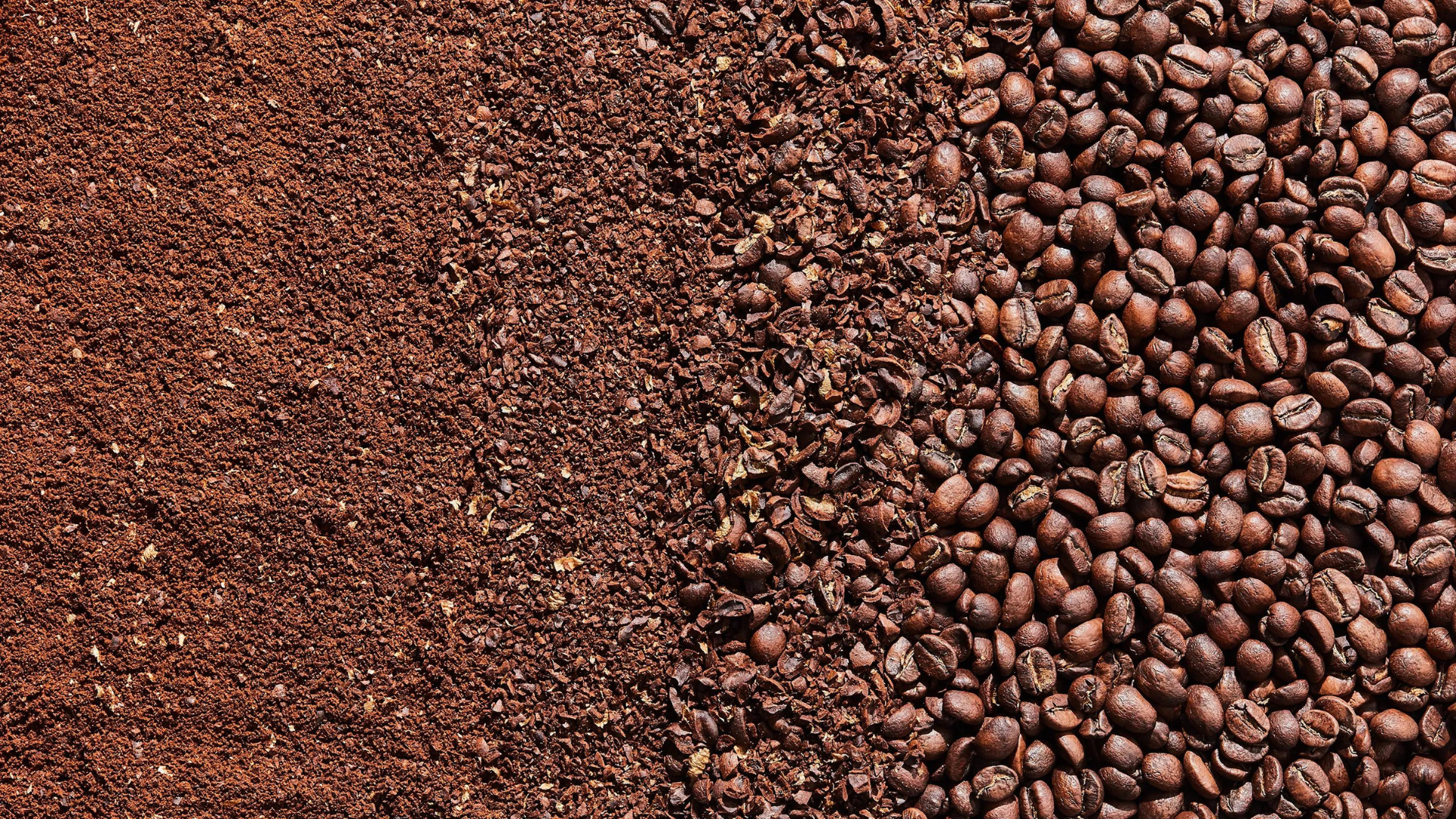
Six coffee grind size and their suitable machine
Sometimes we spend a lot of time choosing our coffee variety or roast, forgetting about one of the most important aspects of coffee brewing: the coffee bean grinds.
If you want to have a nice flavor in your coffee it's important to avoid over and under extraction of the beans, and to manage that you need to master the grind sizes. Under extracted coffees will be sour while over extracted way too bitter.
Each different coffee brewer needs a different grind size, so I spend time researching the most suitable one for the most popular machines so I can share them with you.
In this article you will find:
The reason to grind your own coffee
Over extraction and under extraction. Understanding the importance of the grind size
Blade vs Burr coffee grinders. Which one is better?
Six coffee grind size and their suitable machine
Sum up
The reason to grind your own coffee
If we can buy already grounded coffee, why do we have to do it in our house? The answer is preservation.
When a coffee bean is grounded, it has much more contact with oxygen than the whole bean, this results in a much more quick oxidation, where we will lose aroma and flavor. Experts say that a whole roasted bean keeps ok for two weeks at room temperature, while already grounded coffee just a few days.
Also, the other big benefit is that when you grind your beans you can choose the best size in relation to the coffee brewer you are going to use to avoid over or under extraction.
Over extraction and under extraction. Understanding the importance of the grind size
This is probably one of the most important aspects while making coffee. The best beans and the best machine could be worthless if we don't dominate the extraction.
Every brew method realice extraction of the coffee beans in a way. Some of them the time of contact between coffee and water is shorter, and in other cases is longer.
For example, for an espresso we will have something like 30 seconds of extraction, while in cold brew several hours. For those methods where the contact between water and coffee is for a short time we will need a finer grind, while in the other methods a coarser one.
The main consequence of messing up the extraction is going to be in the flavor. In under extracted coffees we will have a sour and acidic taste. In over extracted beverages, bitter ones.
These mistakes are mostly made because of using the wrong grind size in a coffee brewer, so let's have a look at the 6 most popular ones and their suitable machines.
Blade vs Burr coffee grinders. Which one is better?
Blade and burr coffee grinders are the more common ones. Probably the one that most people have is the first one.
Blade coffee grinders are very popular because they are not expensive. It works similar to a food processor, where the blades cut the coffee beans in small pieces. The big downside of this machine is that the fast movements of the metal blades makes coffee beans move randomly and, in consequence, they are grinded in an uneven shape. Having different sizes of ground coffee together increases the chances of ruining our beverage, because we can have under extracted or over extracted beans.
The other option is burr coffee grinders. This is a more expensive alternative, but with better results. This machine does not work with blades, but with two rough discs named burr. You can adjust the space between these burrs, so you can decide your grind size. This systems works better because the space between both discs remains constant during the whole process, so you can get a more uniform grind in your beans. This is fundamental if you want a high quality cup of coffee.
Six coffee grind size and their suitable machine
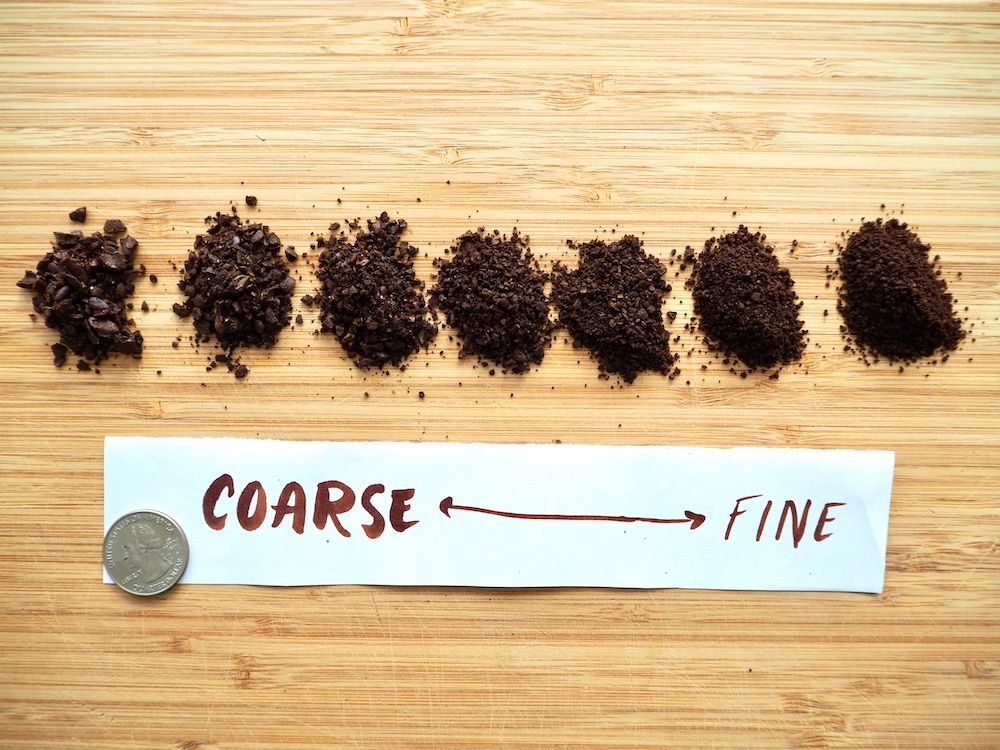
Extra coarse
Each coffee particle has an approximate size of 1.5mm. It's similar to rock salt and it is used to prepare cold brew, where water and coffee sit together for several hours, having time for a good extraction.
Coarse
An approximate size of 1mm each particle and similar to coarse sea salt, this grind size is perfect for the French Press or percolators.
Medium
Our coffee texture should look similar to beach sand, with a 0.75mm measure. We can use this grind size in Aeropress (with a longer brew), Chemex, balance brewer or drip coffee machines.
Medium fine
Here we will have much faster brew methods. Medium fine grind looks like table salt (0.5mm) and it is suitable for moka pots, Aeropress (with a shorter brew) or pour over cones. These are percolation techniques, where coffee and water don't sit together for a long time.
Fine
With 0.3mm each coffee particle, and similar to fine granulated sugar, this grind is excellent for espresso machines. A percolation of 30 seconds needs a fine grind to avoid under extraction.
Extra fine
The finer grind. It is similar to flour and with 0.1 mm is 15 times smaller than the extra coarse grind. It is used only to make Turkish coffee, known for its particular taste and texture and its high caffeine levels.
Sum up
Now we know that grinding the coffee beans is one of the most important moments in the whole process if you want a high quality beverage.
I strongly recommend grinding your own beans and just before making your coffee, but if you are just starting you can go to a coffee shop and ask for your beans grinded for your specific machine. This is a good way to start getting familiarized with the size of the grinding so next time you can buy the whole bean and imitate it.
If you are going to buy a new grinder and you can't afford a burr one, you can do it just fine with the blade grinder. To have an evener grinding, shake the beans in the middle of the process.